Wing Foiling Lessons in Colorado: Learn on Lake Dillon
06/09/26
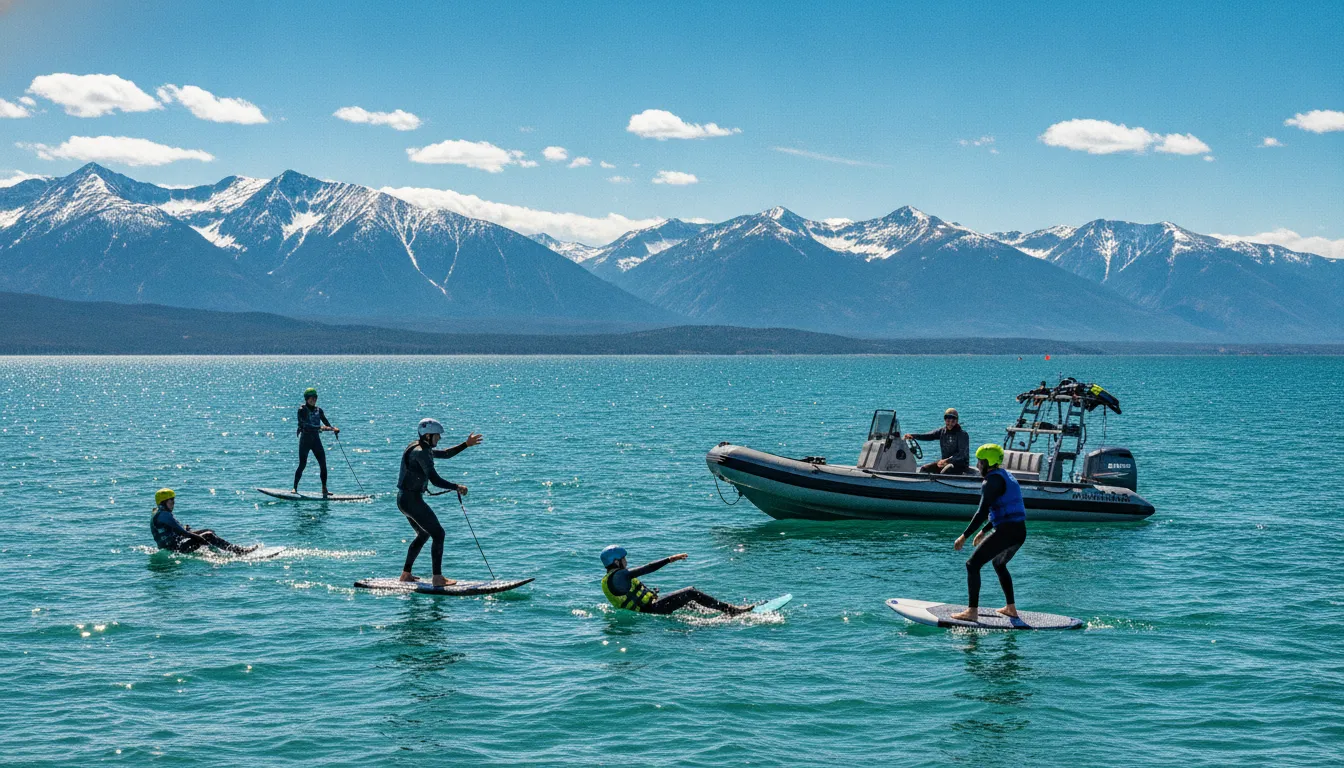
Your first controlled flight begins long before the foil leaves Lake Dillon. Build wing control, board balance, and foil feel in that order, with expert support.
Book your wing foiling lesson on Lake Dillon
Wing foiling lessons teach beginners to manage the handheld wing, steer and balance on a board, then control lift on the hydrofoil. At Lake Dillon, private one-to-one coaching pairs a complete foiling setup with video feedback and boat support from a Zodiac or pontoon. That support lets the coach change locations or wing sizes as conditions shift, while helping students spend more useful time practicing on the water. A focused private session can introduce the core skills, while the three-day intensive gives each stage more time to settle. Across three days, students build wing handling, board control, and foil skills toward a solid foundation. Lessons also include a wetsuit, helmet, leash, and impact vest or flotation, essential gear for Lake Dillon’s cold water and highly variable winds, as Stand Up Paddle Colorado explains.
The real question is not whether you can fly on day one, but how each drill prepares you for the next step. Wing foiling lessons in Colorado: what you will learn first maps that progression from dry-land handling to controlled foil time. Here’s how.
Wing foiling lessons in Colorado: what you will learn first
Beginner wing foiling lessons break one complex sport into a clear set of smaller skills. You first learn how wind affects the wing and board. Then you practice body position, balance, steering, and safe stops. Early sessions focus on control, not flying above the water. The goal is to build habits that still work when conditions shift.
Reading wind before touching the water
A lesson often starts on shore with a wind check. You learn to notice wind direction, stronger gusts, calm patches, and nearby hazards. The instructor also explains where a rider could drift after a fall. This short check helps you plan a safe launch and return before handling the wing.
Next, you hold the wing on land and learn how it responds. Small hand and arm moves can power it, reduce pull, or place it safely overhead. You also practice switching sides without letting the wing drag or twist. These drills make later water practice less rushed.
Safety habits belong in every part of the lesson. That includes checking gear, keeping space from the foil, and knowing when to stop. Research on wing foiling injuries also points to the need for care around equipment and conditions. The published review of wing foiling injuries supports a safety-first approach.
Balance and board control
On the water, beginners usually work from a stable kneeling or standing position. The first aim is to stay centered while holding the wing with light control. You learn how foot placement changes the board’s trim. You also feel how the wing can support balance without pulling you off course.
Basic board control comes before sustained foil flight. Early drills may cover starting, steering across the wind, slowing down, and returning to a safe point. Falls are part of the process, so lessons also teach safer ways to separate from the gear. Controlled repetition lets the instructor correct one issue at a time.
Students who want focused coaching can review the available Lake Dillon foiling lesson options and boat-supported setup. Private instruction gives the coach room to adjust drills to the rider’s balance and wind awareness. It also helps keep the lesson centered on useful practice instead of chasing distance.
Lake Dillon as a mountain classroom
Lake Dillon gives Colorado riders a striking but demanding place to learn. Its marina sits above 9,000 feet, and the lake can be cold, deep, and windy. Conditions may change across the water rather than staying steady. Those traits make close coaching, proper gear, and a clear return plan important.
The challenge also teaches useful judgment. Riders must watch the surface, respond to gusts, and avoid forcing a drill when the wind shifts. Boat support can help an instructor keep practice in a suitable area. It can also reduce time spent trying to return after a drift.
Your first lesson may not end with a long foil ride. A strong start means understanding the wind, managing the wing, and controlling the board with less effort. Those skills form the base for later takeoffs and longer rides. On Lake Dillon, sound choices matter as much as quick progress.
How long does it take to learn to wing foil?
Short answer: Learning to wing foil usually happens in stages, not on a fixed clock. A first lesson builds wing handling, balance, steering, and safe stops. Several close-together sessions can help riders connect those skills into early foil lifts, especially when coaching keeps practice focused.
There is no fixed timeline for learning to wing foil. Progress comes in stages because a rider must blend wing control, board balance, wind sense, and foil control. Some beginners bring useful skills from surfing, paddling, sailing, or snowboarding. Others start fresh and need more time with each part.
Fitness also shapes the pace. Early sessions may include repeated starts, falls, and climbs back onto the board. Related paddle sports can build balance and strength, and research on stand up paddleboarding describes physical demands across several parts of the body. Rest matters because tired riders often struggle to use new skills with control.
What to expect in the first session
A first session usually focuses on the building blocks, not a promise of sustained flight. A beginner may learn how to hold and power the wing, choose a safe position, and steer a stable board. The next goal is linking those actions while reading shifts in the wind.
Prior board sports experience may make balance feel familiar, while sailing experience may help with wind awareness. Neither background removes the need to learn foil-specific control. Beginners without either background can still progress by working through one skill at a time.
Conditions can change the lesson plan. Lake Dillon is cold and deep, with highly variable winds, so an instructor may adjust drills or pause when needed. Safety gear and sound instruction are key because published wing foiling injury research stresses safety and equipment awareness.
Progress across several sessions
Across several sessions, riders can begin linking wing handling, board speed, takeoff, and short controlled flights. Progress is rarely a straight line. A skill that works in one wind range may need more practice when the wind shifts.
Lesson frequency matters because long gaps can make basic movements feel new again. Sessions held close together give riders more chances to recall feedback and apply it. Private coaching can also keep the lesson focused on the rider’s current weak point instead of a set group pace.
Boat support can cut time spent drifting, returning to shore, or reaching a useful practice area. That creates more chances to repeat a drill while conditions allow. Stand Up Paddle Colorado uses boat-supported instruction and a one-to-one format from its Dillon location on Lake Dillon.
A focused multi-day program
A focused multi-day program gives beginners a compact progression rather than a guaranteed result. The first day can build wing and board control. Later sessions can reinforce takeoff, flight position, turns, and safe recovery based on each rider’s needs.
Regular practice helps, but weather, fitness, confidence, and past experience still affect the pace. The useful question is not how fast someone can claim the sport. It is whether each session adds control, awareness, and a clear next skill to practice.
Why boat-supported instruction on Lake Dillon changes the lesson
Short answer: Boat-supported instruction gives beginners more useful practice time on Lake Dillon. A Zodiac or pontoon can help reset a rider, adjust to wind changes, support gear checks, and reduce long swims or paddles back. That matters on a cold, deep mountain lake with variable wind.
Lake Dillon is cold, deep, and known for winds that can shift across the water. Those traits make it an exciting place to learn, but they also shape each lesson. Stand Up Paddle Colorado uses a Zodiac or pontoon to support instruction on the lake.
More practice, fewer long resets
A foil run does not always end near the starting point. Without boat support, a student may spend much of the session paddling back or waiting for help. A support boat lets the instructor collect the rider and gear, then reset for another coached attempt.
That reset can preserve more lesson time for wing handling, board control, takeoffs, and short flights. It does not promise fast progress or a set result. Instead, it gives the student more chances to apply feedback while the lesson is still fresh.
The boat also gives the coach a useful view of each attempt. From nearby, the coach can spot stance, wing position, and board trim issues. Students considering boat-supported wing foiling instruction can expect this approach to be part of the learning setup.
Cold water and changing wind
On a mountain lake, the wind may carry a rider away from the launch point or fade during a reset. Cold, deep water also calls for a plan that limits needless time in the water. The boat gives the instructor another way to manage distance, fatigue, and changing conditions.
That support does not remove risk. The instructor still has to watch the weather, choose a suitable practice area, and adjust the session as conditions change. Students also need to follow instructions and use the provided safety gear.
Published research on wingfoiling injuries supports careful attention to safety and equipment in the sport. Boat support adds a practical layer to that plan. It creates a nearby platform for rest, gear checks, and a controlled return when needed.
Coaching in real lake conditions
A sheltered drill can teach one skill at a time, but riders must also learn how wind and water affect the foil. Lake Dillon offers real changes in wind strength and direction. A boat helps the coach stay close while the student works through those changes.
The instructor can choose when to keep practicing, move to a better area, or pause. That choice matters when conditions no longer fit the student’s current skill or energy. Good coaching is not about forcing another run; it is about using the day well.
This format makes the boat more than a ride back. It supports repeated practice, close feedback, and active condition management. The result is a lesson built around useful time on the foil, while respecting the lake’s cold water and variable wind.
Private lessons versus the 3-day intensive
Short answer: Choose a private lesson if you want targeted one-to-one coaching for a specific skill or a shorter first experience. Choose the 3-day intensive if you want a concentrated learning block with repeated practice across wing handling, board control, and early foil work.
Private lessons and the 3-day intensive offer two ways to build wing foiling skills on Lake Dillon. A private session fits riders who want focused coaching around one clear goal. The intensive suits committed learners who want repeated practice across several days.
Neither format can promise a set rate of progress. Wind, water, energy, and prior board skills all shape each session. The better choice depends on your goals, schedule, and readiness for concentrated time on the water.
How the two formats compare
A private lesson keeps the instructor’s attention on one rider. That setup makes it easier to isolate a sticking point, adjust drills, and spend time on a specific skill. It also gives returning riders a direct way to resume their progression after time away.
The 3-day intensive creates a different learning rhythm. Closely spaced sessions let riders apply feedback while the last lesson is still fresh. That repeated cycle can help committed beginners connect wing control, board control, and early foil work.
Private lessons and the intensive serve different learning needs.
| Comparison point. | Private lesson. | 3-day intensive. |
|---|---|---|
| Best fit. | Riders with a specific goal. | Learners seeking concentrated practice. |
| Coaching style. | Customized, one-to-one feedback. | Progressive coaching across three days. |
| Schedule. | One focused session. | Multi-day time commitment. |
| Practice rhythm. | Targeted work with time between bookings. | Repeated practice over a short period. |
| Useful for. | Troubleshooting or refining one skill. | Building connected skills in sequence. |
Use the table above as a planning guide. Confirm current details before booking.
Current inclusions and price context
Current foiling lesson information lists private instruction at a one-to-one student-to-teacher ratio. Private sessions start at $600 for two hours. The listed 3-day intensive ranges from $1,495 to $1,795, based on the day of the week.
Both options currently list a wetsuit, helmet, leash, flotation or impact vest, video, boat support, and a complete foiling setup. These details reduce the need to assemble specialized gear before learning. Review the contact page or booking flow before booking, since prices and inclusions may change.
Safety gear and coaching matter in a sport shaped by wind, speed, and equipment. A published review of wingfoiling injuries describes injury patterns linked to the sport. On Lake Dillon, boat support also helps instructors manage changing conditions and keep lessons focused.
Which format fits your next skill?
Choose a private lesson when flexibility and precise feedback matter most. It is a practical fit for riders working on wing handling, board control, starts, or another defined challenge. Share that goal before the lesson so the instructor can shape the session around it.
Choose the intensive when you can protect three days for learning and recovery. It asks for more time and physical effort, but it gives each session a clear follow-up point. Before booking, consider your fitness, travel schedule, and comfort with repeated time on cold mountain water.
- Pick private coaching for one clear goal, flexible timing, or a focused skills check.
- Pick the intensive for concentrated repetition and a connected, multi-day progression.
- Check current availability and discuss conditions before committing to either format.
What should you bring to a wing foiling lesson?
Short answer: Bring a swimsuit or quick-dry base layer, sunscreen, secure sun protection, drinking water, a towel, and warm dry clothes for after the session. Stand Up Paddle Colorado lists the specialized lesson gear, including wetsuit, helmet, leash, flotation or impact vest, boat support, and foiling setup.
Bring simple personal items that help you stay comfortable before, during, and after time on Lake Dillon. The lesson setup covers the specialized gear, so beginners do not need to arrive with their own foil equipment.
Personal items for the water
Wear a swimsuit or a close-fitting base layer under the provided wetsuit. Choose fabric that dries fast and does not bunch or rub. Bring a towel and a dry change of clothes for after the lesson.
Pack sun protection suited to time around open water, including sunscreen and secure sunglasses if you use them. Bring drinking water as well. Colorado sun, active movement, and high elevation can make comfort and hydration worth planning before you launch.
- Swimsuit or close-fitting, quick-dry base layer.
- Sunscreen and secure sun protection.
- Drinking water.
- Towel and dry clothes.
- Warm layers for before and after the session.
Gear included with the lesson
Stand Up Paddle Colorado’s wing foiling lessons include a wetsuit, helmet, leash, and flotation or impact vest. They also include video, boat support, and a complete foiling setup. The setup removes the need to buy or transport specialized gear for a first lesson.
Boat support helps the instructor work with changing lake conditions while keeping the session focused on learning. The safety equipment also matters in a sport that combines wind, water, a board, and a foil. A published review of wing foiling injuries supports careful attention to safety and equipment.
Exact gear needs can depend on conditions and the student’s fit. Review the current details for the Foil Colorado lesson program, then ask the team about anything you may need to bring.
A mindset built for learning
Bring realistic expectations and a willingness to practice one skill at a time. Early progress may focus on wing control, body position, and board balance before sustained flight. Falling and resetting are normal parts of learning, not signs that the session has failed.
Arrive rested, ready to listen, and honest about your comfort in the water. Tell the instructor about concerns or limits before launching. Conditions can shift, so a flexible mindset helps you learn from the session the lake provides that day.
Step-by-step learning progression for wing foiling
Wing foiling becomes easier when each skill has its own practice block. The goal is not to force an early flight. Instead, riders build wing control, board balance, foil control, and safe return skills in that order.
Expect to repeat parts of this path as wind and water change. A coach can spot small errors before they become habits. Stand Up Paddle Colorado’s Foil Colorado coaching also uses boat support to increase useful practice time.
The five-step progression
- Learn wing control on land. Practice lifting, turning, and depowering the wing with a relaxed grip. Learn how the wing reacts before adding a moving board.
- Taxi without chasing flight. Start on your knees or stand when stable, then move across the water under wing power. Repeat starts, stops, and simple direction changes.
- Build balance and wind awareness. Hold a steady course while noticing which paths lead upwind or downwind. Learn how stance and wing position change board speed.
- Manage the first foil lifts. Add speed in a controlled stance and let the board rise for short moments. Shift weight with small moves, then settle back down.
- Link rides and return with control. Extend each flight while keeping height and direction steady. Finish by slowing down, touching down, and returning to the planned area.
Repetition before speed
Each step supports the next one. Poor wing control makes taxiing harder, while rushed taxiing leaves little room to learn foil lift. Short, focused rounds help riders notice one change at a time.
A first lift is exciting, but it is not the only mark of progress. Clean restarts, calm falls, and planned returns matter too. Research on wingfoiling injuries and safety supports careful attention to equipment and risk during the sport.
Coaching helps turn repetition into useful practice. An instructor can adjust wing angle, stance, or course based on what happened during the last run. That direct feedback is more useful than rushing into another attempt without a clear change.
Progress across changing conditions
Progress does not always move in a straight line. A rider may taxi well in steady wind, then need more wing practice when gusts arrive. The right response is to step back, reset, and rebuild control.
Lake Dillon adds cold, deep water and changing winds to the learning process. That setting calls for a safety-first plan and close attention to conditions. Boat support can reduce time spent drifting and help riders return for another focused run.
Longer rides should come after a rider can control height, direction, and stopping. A coach may keep one skill as the day’s main goal. This measured approach builds habits that hold up beyond a single lesson.
Who is a good fit for wing foiling lessons?
Short answer: Wing foiling lessons fit beginners who want a coached introduction, crossover athletes with board or wind experience, and returning riders who need focused feedback. The best candidates are comfortable following safety direction, ready for repeated starts and falls, and realistic about weather-dependent progress.
Wing foiling lessons can work for first-time water sports learners and skilled riders alike. You do not need a foiling background to start. A good lesson begins with wing control, board balance, and safe habits before adding foil flight. Coaching gives beginners a clear path instead of leaving them to sort out several new skills alone.
Beginners and crossover athletes
Complete beginners are often good candidates because they arrive without habits from other foil sports. They should be open to falling, resetting, and trying the same movement more than once. Stable beginner gear and step-by-step teaching help make those early sessions easier to understand.
Paddleboarders may recognize balance shifts and the feel of standing on a large board. Research on stand-up paddleboarding also describes its physical and muscle demands. Still, holding a wing and managing a foil add new tasks, so SUP experience does not skip the basics.
Kiters and windsurfers often bring useful wind sense and sail-handling skills. Snowboarders and skiers may feel at home with a sideways stance and edge control. These skills can help, but each rider still needs to learn foil lift, safe falls, and how the wing changes power.
Visitors and cautious first-timers
Lessons also suit visitors who want a more managed first try on mountain water. Lake Dillon is cold and deep, with wind that can change fast. An instructor can choose suitable gear, explain the session plan, and adjust drills as conditions shift. Boat support can also reduce time spent struggling back to a launch point.
A learner should be comfortable in the water while wearing a wetsuit and flotation gear. Basic fitness helps with repeated starts, balance work, and climbing back onto the board. That does not mean you must be a trained athlete. Patience, body awareness, and a willingness to rest are often just as useful.
Cold water and altitude deserve honest thought before booking. Tell the instructor about health concerns, limited swim comfort, or past injuries before the session. Wing foiling has risks like other water sports, so a safety-minded approach to equipment and injury prevention matters. Good coaching adapts the pace without treating every learner the same.
Experienced riders seeking focused coaching
Lessons are not only for new riders. An experienced rider may want help with steady takeoffs, turns, wing control, or riding in varied wind. Focused feedback can spot small stance or timing issues that are hard to notice alone. Video review can also make a specific movement easier to see.
Riders with a clear goal can use Stand Up Paddle Colorado’s experienced watermen and waterwomen to focus the session on their current level. Before booking, share your past experience and the skill you want to improve. That detail helps the instructor plan drills and select gear that fits the goal.
Frequently asked questions about wing foiling lessons
How long does it take to learn wing foiling?
Most people should think in stages, not in one guaranteed timeline. Your first lesson may focus on wing control, board balance, safe falls, and short rides. More time on the water helps you build the feel for wind, foil lift, and controlled returns.
Are wing foiling lessons good for complete beginners?
Yes, complete beginners can start with lessons when they are comfortable in the water and ready for an active session. Coaching helps you learn the wing, board, foil, and safety habits in the right order instead of guessing on your own.
Why take wing foiling lessons on Lake Dillon?
Lake Dillon gives Colorado riders a high-altitude mountain setting with real wind and open water. It can also be cold, deep, and variable. Boat-supported coaching helps students reset, stay near instruction, and spend more useful time practicing.
Should I choose a private lesson or a 3-day intensive?
Choose a private lesson if you want focused coaching, a first taste of the sport, or help with a specific skill. Choose the 3-day intensive if you want concentrated repetition and a stronger chance to connect each learning phase while the feel is fresh.
Ready to Start Learning Wing Foiling in Colorado?
Putting off your first lesson can leave you repeating online tips without knowing which skills to practice or how to correct mistakes. Starting now gives you time to build control step by step, then return for more practice while the learning process stays familiar. A structured lesson also helps you spend your time with purpose, so each session moves you closer to riding with greater confidence.
Choose private instruction for focused support or explore the three-day intensive when you want more time to connect each stage of learning. Ready to begin? Book your wing foiling lesson or check availability to choose an option and start planning your time on Lake Dillon.