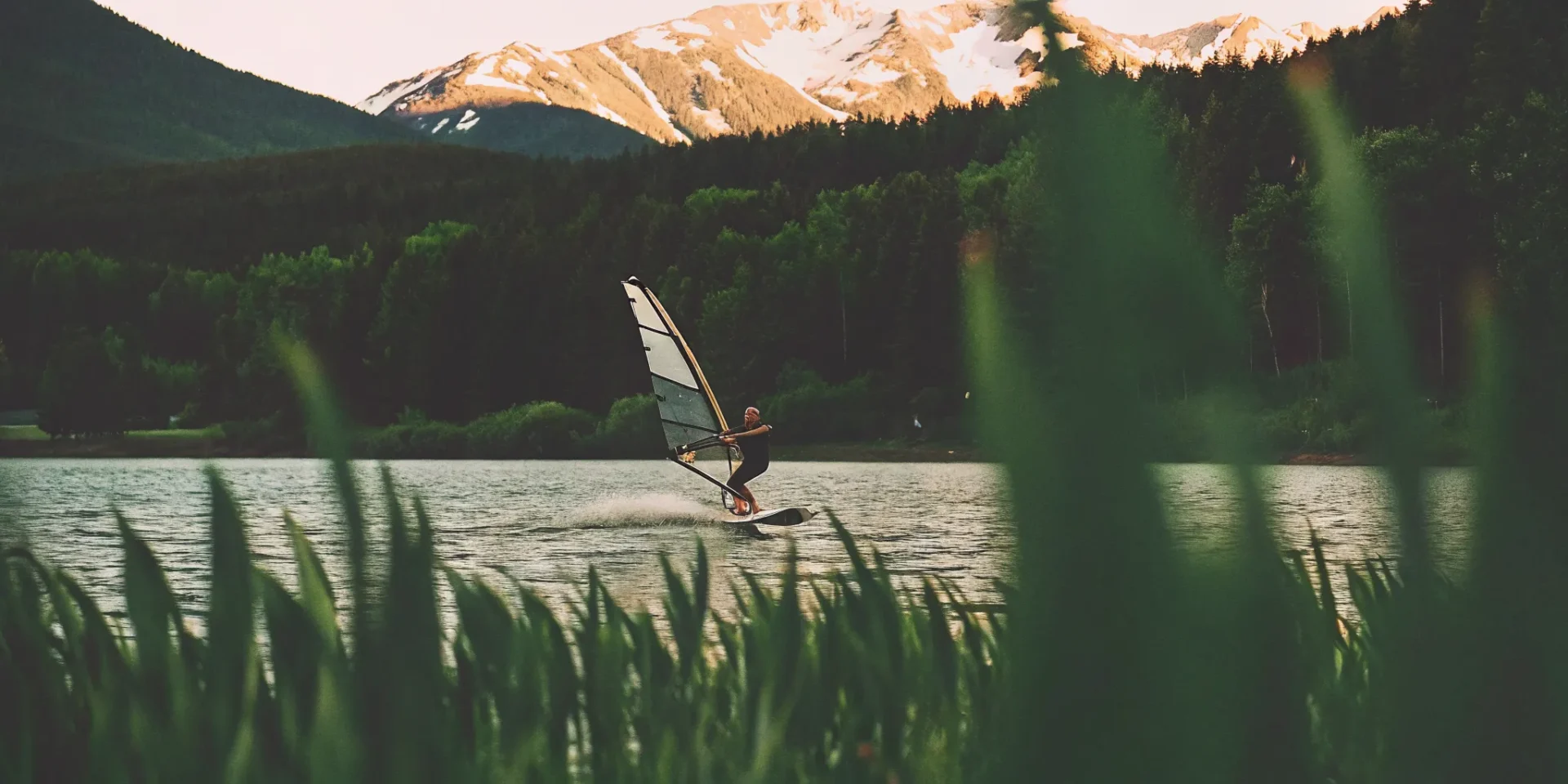
Flying across the water on a hydrofoil is one of the most exciting experiences you can have in the Colorado mountains. Stand Up Paddle Colorado is the only foil operator in Summit County. We offer expert, hands-on instruction to help you master this fast-growing alpine water sport.
Professional wingfoiling lessons lake dillon provide a structured, safety-first progression that guides beginners from basic wing handling on the beach to independent flight on a hydrofoil. These premium, boat-supported sessions cost $600 for a two-hour private lesson or $1,200 for a four-hour private lesson. With all high-quality gear like wetsuits, helmets, and impact vests included. According to research on MIT Sailing, learning is physically strenuous and involves frequent swimming, making professional coaching and boat support crucial for your safety and success. Expert guidance helps you build the muscle memory needed to steer and balance. Soon, you will safely control your lift on the water.
Before you strap on a leash and head out onto the water, it helps to know how your training begins. We cover beach steps and water transition details below. See What Is Covered in a First Wingfoiling Lesson on Lake Dillon.
What Is Covered in a First Wingfoiling Lesson on Lake Dillon
Taking your first step into high-altitude flight begins with a structured, safety-first introduction on the water. To make sure you feel safe and ready, wingfoiling lessons start with a detailed land briefing. Professional instructors guide you through the anatomy of your gear. They show you how to hold, tilt, and flip the handheld wing. You will also learn vital safety rules, such as wearing essential gear like a helmet, footwear, and an impact vest. This gear protects you from equipment contact. In fact, contact with your own gear is a common cause of minor injuries according to sports safety data published in PMC. Instructors also teach you crash safety. You will learn how to hold onto the wing to float down safely rather than falling onto the foil.
Dry-Land Drills and Wing Handling
Before you touch the water, you will spend time on the beach practicing wing control. This dry-land drill is where you build the muscle memory needed to steer and balance. You will stand on the shore of Lake Dillon, feel the afternoon thermal breeze, and learn how to position your body relative to the wind. Instructors show you how to power up the wing to catch wind. They also show you how to depower it instantly to stay in control. Beach drills remove the challenge of water balance. This lets you focus purely on the wing.
On-Water Balance on Stable Fin Boards
Once you master wing control on the sand, it is time to move to the water. Your initial water time does not start on a foil board. Instead, introductory lessons begin on stable boards with fins. This setup helps you build strong basics before adding foil complexity. Operating on a stable board lets you practice steering, balancing, and sailing upwind without the sudden lift of a hydrofoil. You will kneel, stand, and feel the board glide over the cool water. During this time, you learn to manage the wing to steer. This helps you control your direction.
Boat Support and Real-Time Video Feedback
To keep you safe and speed up your progress, every lesson is backed by close boat support from a Zodiac or pontoon. Your instructor stays near you, giving clear tips as you ride. They also adapt your path to shifting winds. This close boat support is a crucial safety net on the vast waters of Lake Dillon. Along with active boat coaching, lessons use video feedback to help you see and correct your form. This feedback ensures you make the most of your high-altitude session.
Wingfoiling Progression: From Beginner to Independent Foiling
Learning to ride the wind on a hydrofoil is a physical path that takes time and effort. Because this sport is strenuous and involves a lot of swimming, having a clear plan makes a big difference. Stand Up Paddle Colorado offers structured training to help you build skills step by step. Our team guides you through each phase so you can safely gain confidence on the water.
Our structured lesson program follows a five-step progression to take you from a shore-bound beginner to an independent foiler riding the wind.
- Dry Land Handling and Safety:
Your first step begins on the shore with safety drills and beach practice. You will learn to carry, hold, and turn the wing without letting it touch the ground. Instructors teach you how to use wind power to control your direction and balance. You will also learn vital safety rules, such as holding onto your wing to float during a fall. This technique prevents landing on the foil, as noted by MIT Sailing.
- Board Control on Fin Boards:
Before you try to fly, you must learn to balance on the water. Community Sailing suggests starting on stable boards with fins instead of foils. Using a fin board lets you focus on basic steering and balance. You will practice staying upright, catching the breeze, and sailing upwind without the extra challenge of a hydrofoil beneath your feet.
- Wing Handling on the Water:
Once you feel comfortable on a fin board, you will take the wing into the water. This step combines your land drills with water balance. You will practice kneeling, standing up, and steering the board using only the wing. During this phase of learning to wingfoil, you learn how to handle wind shifts. This keeps you in control while taxying across the lake.
- Transition to Foil Boards:
Next, you move from a fin board to a true foil board. As skills advance, students shift to foil-equipped boards to start experiencing the feel of the hydrofoil. You will learn how to stand over the mast and keep the board flat on the water. This stage prepares you for the sudden change in balance that happens when the board begins to rise.
- First Flights and Independence:
The final phase is learning to rise above the water and fly. You will practice using the wing to generate speed, pumping the board, and controlling your height. To speed up this process, some riders choose a 3-day intensive program to get more time on the water. Mastering these steps helps you become an independent foiler who can safely ride the wind on Lake Dillon.
How Much Do Wingfoiling Lessons Cost at Lake Dillon?
Investing in wingfoiling lessons is the fastest way to master this exciting wind sport safely. High-quality instruction helps you avoid bad habits and prevents damage to expensive gear. As the only wingfoiling operator in Summit County, Stand Up Paddle Colorado provides premium, structured coaching programs designed to get you flying above the water.
Private Wingfoiling Lesson Rates
Individual coaching ensures that your instructor focuses entirely on your skill level and pace. A two-hour private lesson costs $600 and covers the core fundamentals of wing handling, beach drills, and first water runs. For a deeper dive, a four-hour private lesson costs $1,200, which allows enough time to transition from stable fin-equipped boards to active foil-equipped boards.
These private lessons are held at our Lake Dillon location, where afternoon thermal winds provide consistent and manageable conditions for learning. Every lesson is fully supported by a motorized chase boat, such as a Zodiac or pontoon. Which allows your coach to stay close to you for real-time tips and quick wind-shift adaptation.
The Three-Day Intensive Program
For students who want to become truly independent riders, the three-day intensive program is the best option. This program costs $1,795 and is ideal for dedicated specialty enthusiasts who want to build muscle memory through back-to-back sessions. Spreading your training over three days gives you ample time to master wing control, balanced riding on fin boards, and the mechanics of initiating lift on a hydrofoil.
Each session in the intensive course builds on the last, combining land-based theory with extensive on-water practice. This format is highly recommended because learning to foil can be physically strenuous and involves frequent swimming, as noted in guidelines from the MIT Nautical Association. Spreading the effort over three days prevents fatigue. This keeps your mind sharp for learning.
What Is Included in the Cost?
Our premium instruction rates are fully inclusive, meaning there are no hidden rental fees for the specialized gear. Your lesson fee covers a top-tier wing, a high-volume foil board, a safety helmet. A high-buoyancy impact vest, and a proper wetsuit to keep you warm in the cool mountain water. We also use modern waist leashes clipped around the foil mast and wing handle to keep the equipment secure.
Additionally, lessons include video feedback to help you analyze your body position and board trim. Your instructor will capture video clips during your rides and review them with you on the boat or the beach. This visual review is a proven tool for progress. It corrects minor balance errors and speeds up your learning curve.
Lake Dillon Wingfoiling Price Tiers
To help you choose the right path for your budget and goals, we offer three distinct instruction tiers. Review the table below to find the right program.
| Program Tier | Duration & Format | Price | Best For |
|---|---|---|---|
| Introductory Private | 2 Hours, 1-on-1 | $600 | Beginners who want to try the wing and learn basic wind handling. |
| Comprehensive Private | 4 Hours, 1-on-1 | $1,200 | Riders ready to transition from fin boards to first foil rides. |
| Three-Day Intensive | Multi-Day Program | $1,795 | Enthusiasts aiming for complete independence and sustained flight. |
Ready to start your foiling journey? Explore our full range of wingfoiling lessons and book your session with our team of expert watermen today.
What Equipment Is Provided for Wingfoiling Lessons?
You do not need to buy any gear before you start your first lesson. When you sign up for wingfoiling lessons, your school gives you all the tools you need to stay safe, warm, and successful on the water. Every piece of gear helps you learn fast and feel safe.
Essential Safety Gear for Cold Water
Lake Dillon sits at high altitude, so the water stays cold all year. Because of this, staying warm is a key part of staying safe. Your lesson includes a thick wetsuit that is three to four millimeters thick. This thick neoprene keeps you warm so you can focus on your skills. You also get a thick impact vest and a helmet to protect your body.
Most minor sports injuries happen when riders make contact with their own board or metal foil. An impact vest adds buoyant float and guards your ribs, while a hard-shell helmet protects your head from bumps during a fall. High-altitude sun is also very strong, so watermen suggest wearing polarized sunglasses and solid water shoes to keep your feet warm and safe from rocky shores.
A Solid Board and Foil Setup
Beginners need different boards as they gain skill. At first, you will not ride a foil. You will start on a wide, stable board with simple plastic fins. This setup helps you learn to steer and balance without too much speed. Once you can control the wing, you will move to a true foil board. This board has a metal mast and a wing-like hydrofoil attached below.
You will use a waist leash to keep your gear close. A waist leash is clipped around the foil mast and the wing handle. If you fall, this line stops your wing and board from drifting away. It also keeps the sharp foil at a safe distance from your body while you swim.
On-Water Support and Boat Coaching
Lake Dillon has a lot of open water, which is great for learning. But the wind can shift, and you might drift downwind as you practice. Your school uses a motorized boat to watch you at all times. A Zodiac or pontoon boat stays near you during your session.
Your coach sits in this boat to give you real-time tips. The boat can also pull you back upwind if you drift too far. This support means you do not have to worry about getting lost or tired on the lake. You can focus all your energy on wing handling and learning to fly.
Why Lake Dillon Is a Premium Destination for Wingfoiling Lessons
Choosing the right spot to learn a new water sport is very important. Lake Dillon stands out as the top spot in Colorado for high altitude water sports. With its vast size, reliable mountain winds, and top tier coaching, this mountain lake has everything you need to build your skills. If you want to start wingfoiling lessons, this scenic spot provides the perfect classroom.
Expansive Water Surface for Safe Training
Space is key when you learn to handle a wing and a board. Lake Dillon is a massive mountain reservoir with over 3,000 acres of open water. This vast space is ideal for water sports instruction. You do not have to worry about tight spaces or crowded shores while you practice. Students have plenty of room to drift, fall, and find their balance without stress. This large area keeps everyone safe as they learn to steer and ride.
Reliable Afternoon Thermal Winds
To fly on a hydrofoil, you need reliable wind. The local weather patterns at this high altitude create consistent conditions. The lake is known for its steady afternoon thermal winds. These winds blow across the cool water as the warm sun heats the surrounding peaks. They provide steady, manageable breeze levels that are perfect for learning. You can count on these daily wind shifts to practice your wing control on a regular schedule.
The Only Wingfoiling Operator in Summit County
Expert guidance is hard to find in the high country. Stand Up Paddle Colorado is the only professional wingfoiling operator in Summit County. We are actively building our wingfoiling program with a strong focus on elite coaching and premium gear. Our team consists of skilled watermen and waterwomen who know the lake and the wind. We use support boats to stay close to you on the water, which allows for live coaching and quick adjustments as the wind changes.
A Majestic Mountain Experience
Learning here is more than just a physical challenge. The lake sits at about 9,000 feet above sea level, surrounded by the dramatic peaks of the Rocky Mountains. The stunning mountain scenery makes every session on the water feel like a true adventure. You can enjoy the views of the Continental Divide while you build your skills. This unique setting makes your learning experience truly memorable. You will love gliding across the water.
The High-Altitude Advantage: How Lake Dillon Conditions Help You Learn
Learning a new water sport requires the right environment. At Lake Dillon, our elevation sits at about 9,000 feet above sea level. This high altitude is not just a scenic backdrop. It gives you a real physical advantage when you take wingfoiling lessons. The unique mountain air and water conditions help you learn faster and fly sooner.
Thinner Mountain Air Means Nimble Wings
The air at high altitude is less dense than at sea level. Because the air is thinner, it has less aerodynamic drag. When you hold a wing in your hands, it feels lighter and moves more easily. You can steer, flip, and power up the wing with less effort. This responsive feel makes it much easier to master basic wing handling during your first hour on the water.
Thinner air also changes how the hydrofoil behaves under your board. Lower air density helps the foil rise with less resistance. Our students often find they can get on foil and start gliding with less board speed than they would need at sea level. This lift advantage is a key reason why Summit County is a premier spot for learning this sport.
Consistent Thermal Winds Create Perfect Practice Slots
Mountain lakes are famous for their wind patterns. Lake Dillon is known for its highly reliable thermal winds that build in the afternoon. As the mountain sun heats the land, cool air draws across the water. This process creates steady, clean wind that is perfect for beginners. You do not have to fight sudden, gusty shifts while trying to balance.
According to safety guides from the MIT Sailing Pavilion, beginners should start training in light to medium wind conditions. The afternoon winds on the lake stay within this ideal range. This manageable wind lets you focus on your stance and wing angle. You can build muscle memory in a calm, controlled space.
Managing Altitude Fatigue with Support Boats
Learning to wingfoil is a great workout. It involves physical effort and frequent swimming as you learn to stay upwind. At 9,000 feet, your body burns energy faster because there is less oxygen. You may feel tired more quickly than you would on the coast. Your muscles have to work harder to keep you warm and balanced in the water.
We use active boat support to help you manage this high-altitude fatigue. Our team follows you in a Zodiac or pontoon boat during your entire session. The boat keeps you safe and saves your energy. If you drift downwind, we pull you back upwind so you do not have to swim. This support allows you to spend your energy on flying instead of paddling.
Frequently Asked Questions
Is wing foiling allowed on Lake Dillon?
Yes, wing foiling is fully allowed and is growing fast on Lake Dillon. The expansive water and reliable afternoon thermal winds provide an ideal setting for learning. Stand Up Paddle Colorado is the only professional foil operator in Summit County. According to Stand Up Paddle Colorado, the lake provides the perfect open space and wind conditions needed for safe, structured foil instruction.
Do I need experience to take wingfoiling lessons?
No, you do not need any prior wind or water sports experience to take a lesson. Instructors meet you at your current skill level and guide you step by step. Lessons start on land with wind theory and wing handling drills before you enter the water. However, learning to wing foil is physically strenuous and involves frequent swimming. The MIT Sailing Wiki notes that students should prepare. Learning involves paddling and swimming upwind.
What is the typical progression in a wingfoiling lesson?
You will start on land to learn wing control and wind basics. Once on the water, you will practice on a stable board equipped with fins instead of a hydrofoil. This lets you focus on steering and balance without the complexity of flight. As your skills advance, you will transition to a foil-equipped board to learn how to initiate lift. Research on Community Sailing shows that starting on stable fin boards is the most effective way to build solid core skills before trying to fly.
What equipment is provided during my wingfoiling lessons lake dillon?
Stand Up Paddle Colorado provides all the premium gear you need to stay safe and comfortable. This includes a wing, a stable training board, a hydrofoil, a helmet, an impact vest, and a proper leash setup. Because you will spend a lot of time in the cool mountain water, a wetsuit is also provided. Safety is a major priority. The MIT Sailing Wiki recommends wearing a helmet, an impact vest, and proper footwear to protect yourself from equipment contact during crashes.
How much do wingfoiling lessons lake dillon cost?
Private wingfoiling lessons on Lake Dillon cost $600 for a single two-hour session. If you want a more comprehensive learning experience, a four-hour private lesson is available for $1,200. These lessons include expert coaching, video feedback, boat support, and all necessary gear. For long-term skill building, you can also book a three-day intensive program. You can check rates and book your session directly on the Stand Up Paddle Colorado website.
Ready to book your wingfoiling lesson at Lake Dillon?
Waiting to try wingfoiling means you miss out on the best wind of the summer season. Starting your lessons now gives you the time needed to master the gear, build your balance, and ride above the water before cold weather arrives. When you delay, you lose the opportunity to train with our local crew in comfortable, warm water. Our expert coaches use boat support to guide you through every step so you can learn quickly and stay safe. Get on the reservoir water and feel what it is like to fly.
Ready to book? Book your wingfoiling lesson at Lake Dillon to start your progression with our expert team today.