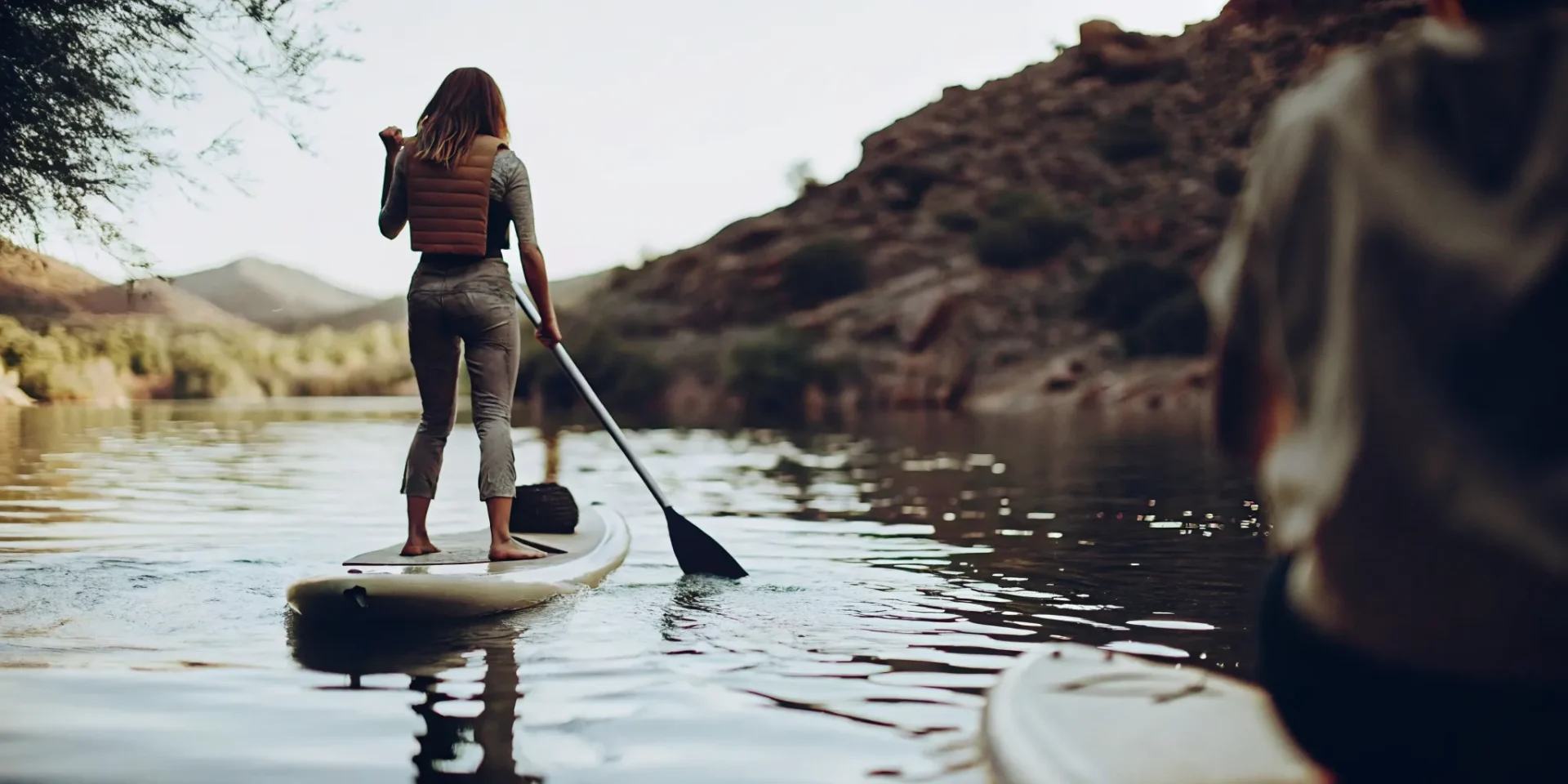
How to Stand Up on a Paddle Board: Beginner Guide
06/23/26
To learn how to stand up on a paddle board, begin on calm water in a kneeling position. Place your feet one at a time beside the board’s center handle, rise while keeping your knees bent, and look toward the horizon. A wide, relaxed stance makes small wobbles easier to manage.
Ready to practice? Choose your preferred Avon and Vail paddle board rental location or Dillon paddle board rental location, then check availability for your outing.
Your first successful stand is less about strength than patient setup. A stable board, properly fitted personal flotation device, suitable leash for the venue, and protected practice area give you room to focus on balance. Always follow local rules, staff guidance, and current water and weather information before launching.
Plan your first practice around control rather than distance. Spend a few minutes paddling on your knees, turning in both directions, and returning to your launch point before trying to stand. This short rehearsal shows you how the board responds and gives you a dependable way to reset. Keep the shoreline and your chosen practice boundary in view throughout the session.
How to stand up on a paddle board step by step
Start close enough to shore that you can pause, reset, or finish the session without a long return paddle. Before getting on, identify the board’s center handle. This marks the balance point and gives you a useful reference for foot placement.
- Begin on your knees. Move onto the board from shallow water and kneel on either side of the center handle. Keep your knees about shoulder-width apart. Take a few easy paddle strokes to feel how the board responds when you shift your weight.
- Set the paddle across the board. Place the paddle horizontally in front of your knees. Hold the shaft with both hands and use it as a light point of contact. Your legs, not your arms, should do most of the work as you rise.
- Place one foot at a time. Lift your hips slightly and bring one foot forward beside the center handle. Place the other foot on the opposite side. Keep both feet parallel and centered between the rails.
- Stand from your legs. Raise your chest gradually while keeping your knees bent. Look forward rather than down at your feet. Once upright, bring the paddle into paddling position and make a gentle stroke.
- Reset without rushing. If the board begins to wobble, bend your knees, lower your center of gravity, and keep your eyes up. You can return to your knees at any time.
Repeat the sequence several times near shore before paddling farther. Each controlled transition teaches your feet where to land and helps you recognize how the board reacts. Once standing feels predictable, practice lowering yourself back to your knees with the same slow control.

Build a stable beginner stance
A good stance lets your ankles, knees, and hips absorb small movements from the board. Stand near the center handle with your feet parallel, about hip- to shoulder-width apart. Point your toes forward and keep your weight balanced between the balls and heels of both feet.
Use soft knees and a tall chest
Locked knees transfer every ripple directly into your upper body. Slightly bent knees act like suspension, giving you time to respond. Keep your chest tall and your shoulders relaxed. If you feel tense, exhale and loosen your grip on the paddle.
Look where you want to go
Looking down often pulls your head and shoulders off center. Pick a fixed point ahead and let your peripheral vision track the board. Check your feet briefly when needed, then return your gaze to the horizon.
Let the paddle support your balance
The paddle is not only for propulsion. A blade moving through the water creates a useful point of support. Make short, smooth strokes near the board while you settle into your stance. Avoid reaching far beyond a comfortable range because overreaching can pull you off balance.
| Body position | What it does | Common correction |
|---|---|---|
| Feet parallel near center | Keeps weight over the board’s balance point | Move feet closer to the center handle |
| Knees softly bent | Absorbs small board movements | Lower slightly instead of locking your legs |
| Eyes forward | Keeps head and shoulders centered | Choose a point on the horizon |
| Paddle blade engaged | Adds support while moving | Use short strokes close to the rail |
Why should beginners start on calm water?
Calm water reduces the number of variables a beginner must manage at once. With fewer waves and less wind, you can concentrate on the kneeling-to-standing transition, foot position, and paddle strokes. Protected water does not guarantee an easy session, but it can create a more manageable learning environment.
Check current conditions before every outing because mountain weather and water can change. Ask on-site staff about appropriate practice areas and boundaries. Stay close to shore while learning, and end the session if conditions move beyond your ability or comfort level.
Choose a location that fits your experience
Nottingham Lake in Avon offers an in-town setting that can suit a first practice session when conditions and operations allow. Lake Dillon provides a larger mountain-water experience, where beginners should pay close attention to current guidance and remain within an appropriate area. Review the details for Avon and Vail rentals at Nottingham Lake and rentals at Dillon Marina before choosing.
Want a board ready for your practice session? Choose a Stand Up Paddle Colorado location and book your rental.
How do you fall safely from a paddle board?
Falling is a normal part of learning. When a fall is unavoidable, aim to fall away from the board and into open water rather than trying to land on the deck. Keep your arms clear of the board, protect your head as needed, and avoid diving headfirst.
Know the water and local rules
Do not assume an area is deep enough to jump or dive. Water depth, underwater hazards, and shoreline conditions can vary. Follow all venue rules and staff instructions. Wear a properly fitted personal flotation device and use the type of leash appropriate for the location and conditions.
Return to the board calmly
After a fall, orient yourself, keep control of your breathing, and stay with your board unless local guidance says otherwise. Approach the center of the board, reach across the deck, and pull your chest onto it while kicking your legs. Turn to sit or kneel before collecting your paddle and continuing.
If you are tired, cold, unsure of conditions, or repeatedly unable to get back onto the board, return to shore and ask for help. Knowing when to stop is part of sound paddling judgment.
Fix common beginner balance mistakes
Most early balance problems come from stance, tension, or trying to do too much at once. Small adjustments usually work better than dramatic corrections.
Standing too far forward or back
If the nose or tail sits unusually low, move toward the center handle. Make foot adjustments one at a time and keep your knees bent while shifting. The board should sit relatively level when your weight is centered.
Holding your breath and gripping tightly
A tight grip can make your shoulders rigid, and a rigid upper body has trouble adapting to movement. Relax your hands, breathe steadily, and allow the board to move beneath you. Stability does not mean keeping the board perfectly still.
Using only your arms to paddle
Arm-only strokes tire quickly and can lead to overreaching. Keep your core engaged and make controlled strokes close to the rail. On a first session, focus on stopping, turning, and returning to your launch point rather than covering distance.
Rushing the transition to standing
Some beginners try to jump from kneeling to fully upright. Instead, pause in a low squat, confirm that both feet are centered, then rise gradually. If you lose control, lower yourself to your knees and begin again.
Beginner paddle board setup and safety checklist
Good preparation makes it easier to focus on the skill itself. Confirm that the board, paddle, and safety gear are appropriate for you and the venue. Ask staff for help with fit and setup rather than guessing.
- Wear a properly fitted personal flotation device and follow local requirements.
- Use a leash suited to the venue, current conditions, and staff guidance.
- Adjust the paddle to a comfortable length for stand-up paddling.
- Secure loose items and protect anything that should not get wet.
- Check current weather, water conditions, boundaries, and local rules.
- Begin near shore in an appropriate practice area.
- Tell someone your plan and paddle within your abilities.
- Return to shore before fatigue or changing conditions become a problem.
Before leaving shore, rehearse the simple skills that help you return: a forward stroke, a stopping stroke, and an easy turn. Confirm where you are allowed to paddle and identify a clear landmark at your launch point. If you cannot comfortably control the board from your knees, spend more time kneeling before trying to stand. A patient setup keeps the session focused on skill building instead of recovery.
Stand Up Paddle Colorado’s team can help guests understand equipment and location considerations before launching. Learn more about the people behind the operation on the Stand Up Paddle Colorado about page.
Frequently asked questions
Is it hard to stand up on a paddle board?
Many beginners can stand after a few controlled attempts, but the experience depends on the board, conditions, instruction, and individual comfort. Begin on your knees, practice near shore, and return to kneeling whenever you need to reset.
Where should my feet be on a paddle board?
Place your feet parallel on either side of the center handle, about hip- to shoulder-width apart. Keep them centered between the board’s rails. If the nose or tail sits low, adjust one foot at a time toward the center.
Should I look down when standing up?
Look briefly to place your feet, then lift your gaze toward the horizon as you rise. Looking forward helps keep your head and shoulders centered. Keep your knees bent and use the paddle for light support.
What should I do if the paddle board wobbles?
Bend your knees, relax your upper body, and keep your eyes forward. Make a short, smooth paddle stroke close to the board. If the wobble continues, lower yourself to your knees and reset before trying again.
Choose a Colorado paddle board location
Learning to stand is one of the most rewarding moments in paddle boarding. Give yourself time, start with the fundamentals, and make conservative decisions about conditions and distance. A well-paced first session can help you build the control needed for future outings.
Book a paddle board rental in Avon and Vail or book a paddle board rental in Dillon to begin planning your Colorado water adventure.