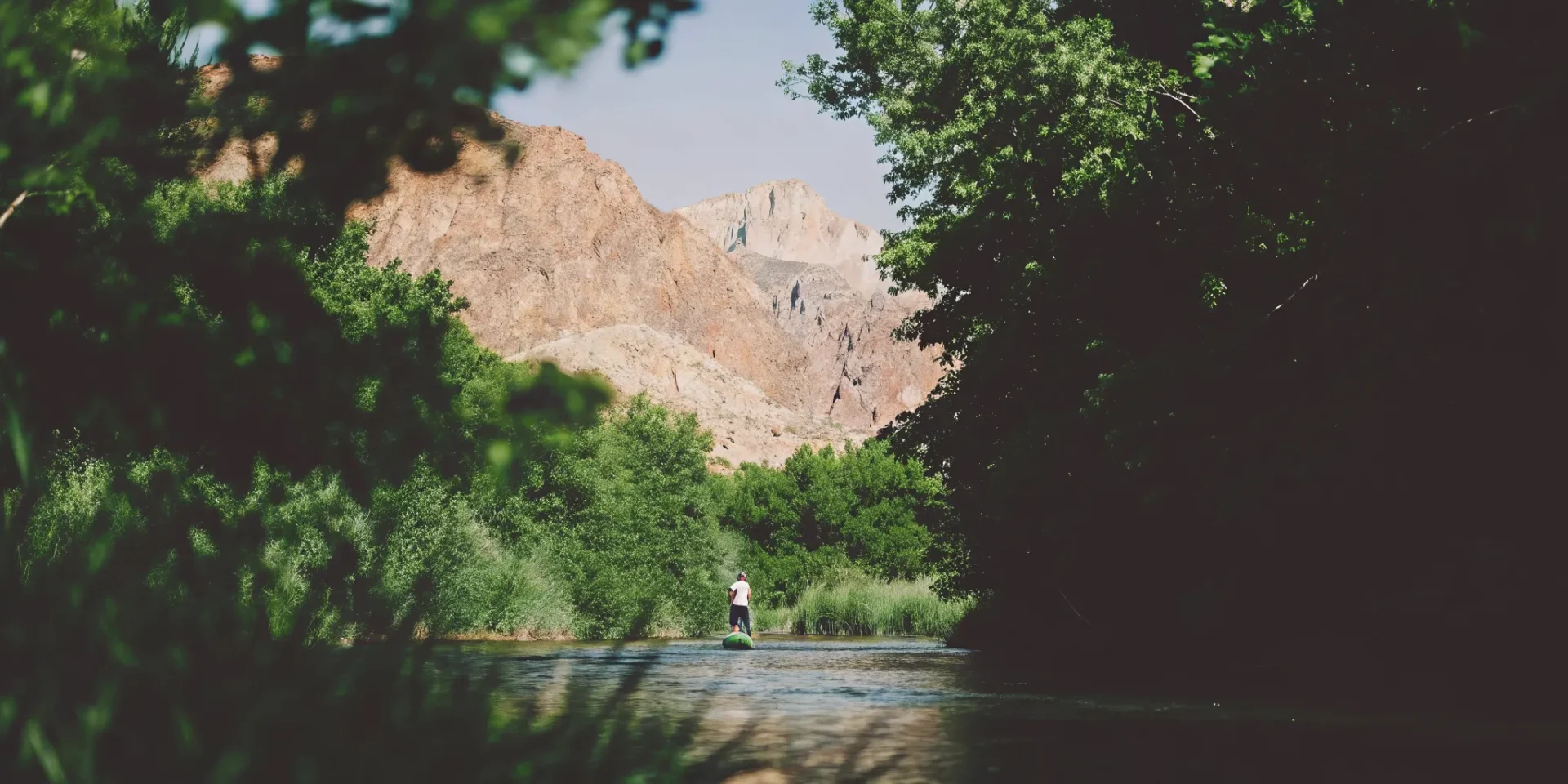
Moving water offers a different thrill than the quiet glass of a high mountain lake. It is a choice between the steady flow of a river and the still surface of a reservoir. Each setting provides a unique way to see the Rockies.
Colorado River paddle boarding provides a lively trip that is very different from the calm days found on lakes like Dillon or Nottingham. While lake paddling focuses on balance in a still setting, the river brings a constant flow that requires active steering and care from every guest. This moving-water trip allows you to travel through the landscape with the current to see parts of the Rockies you cannot find from the shore. New paddlers often start on flatwater to build their core strength and skill before they move to the more complex setting of the river. Both options offer stunning mountain scenery and fresh air for an active day that your whole group will enjoy and remember for years.
You must decide which environment fits your group best. We will help you weigh the pros and cons of each setting to ensure your day is both safe and fun. To find the right fit for your next mountain trip, Colorado River paddle boarding vs lake paddling at a glance is where we begin.
Colorado River paddle boarding vs lake paddling at a glance
Choosing between a lake and a river for your next trip changes how you move on the water. Both spots offer a great day out, but they do not feel the same. Lakes are calm and let you go at your own pace. Before you grab a board, it helps to know which water fits your goals for the day.
The feel of the water
Lake paddling is all about peace and calm views. Places like Lake Dillon have flat water that stays still most of the day. This makes it easy to stand up and find your balance without much stress. You can stop to look at the peaks or take a quick dip in the cool water.
Colorado River paddle boarding brings a more active feel to your trip. The water flows in one way and carries your board with it. You will feel the push of the stream as you move past banks and rocks. This kind of trip keeps you moving and asks for more focus than a still lake.
Skills and gear you will need
You do not need much gear to start on a lake. A standard board and a paddle are enough to get you going. For a safe trip, you must have a life jacket on your board or body. The National Park Service says it is the best way to stay safe on any water.
River trips need a few more tools and a bit more skill. You will want a board that can handle bumps and a leash that you can pull off fast if you get stuck. You also need to know how to read the water to find the best path. If you are new to the river, getting help from a guide is a smart move.
| Feature | Lake Paddling | Colorado River Paddle Boarding |
|---|---|---|
| Water Motion | Still and flat | Flowing and active |
| Skill Level | Great for beginners | Needs some practice |
| Gear Needs | Basic SUP kit | River board and safety leash |
| Pace | You set the speed | The river helps you move |
| Best For | Relaxing and views | Thrills and adventure |
Choosing your best fit
If you have never stood on a board, start with a lake. It gives you the time to learn without the water pushing you around. You can check out water fun in Summit County to find a good spot for your first try. Lakes are also better for large groups or young kids who just want to play.
The river is the best choice if you want to test your skills. It offers a sense of fun that you just can’t find on a pond. You will see more of the land as you float down the stream. For those who want to see it all, look at the full list of summer water trips to plan your next big outing.
What makes Colorado River paddle boarding different?
Moving water and current
Paddle boarding on the Colorado River is not like a calm day on Lake Dillon. The biggest change is the moving water. While a lake stays still, the river has a steady flow that carries your board downstream. This means you do not always have to paddle to move, but you do need to stay alert. The current can be gentle in some spots and faster in others, so you must know how to use your paddle to steer.
The Upper Colorado River is a top spot for those who want to try Colorado River paddle boarding. It offers a mix of quiet water and small splashes that keep the trip fun. Beginners often find that the river does more of the work for them. They still need to learn how to keep their balance as the water shifts. Being on a river means you are always on the move, and the views change with every bend. It is a great way to see the wild side of the state while you stay active.
River features and flow
Unlike a flat lake, a river has features like eddies, rocks, and riffles that you must watch for. An eddy is a spot where the water moves back upstream or stays still behind a rock. These are good places to rest or wait for your group. Learning to “read” the water helps you find the best path through the channel. You will need to make quick route choices to avoid shallow spots or stay in the deepest part of the flow.
Flow levels on the Colorado River can change based on the time of year and the weather. High water in the spring makes the river move much faster, while lower water in late summer reveals more rocks and blocks. It is vital to check the current conditions before you start your trip. Check a National Weather Service forecast to see if rain or wind might affect your safety. This helps you know if water levels are right for your trip.
Following the lead of a pro is the best way to handle these shifts. They know how to spot the best lines and keep your group in safe water. Being ready to change your plans is part of being a smart river visitor. Taking the time to learn the river will make your day much better.
Guided trips and safety
Because the river is always changing, many families choose a guided trip for their first time out. A guide acts as an expert who knows the river well. They can show you the best paths to take and help you if you fall off your board. Having a pro with you makes the trip much safer and more fun for everyone in the group. They also bring the right gear, like life jackets and helmets, to keep you safe on the water.
Guided tours also help with the travel plans for a river trip. Since the water only goes one way, you need a plan to get back to your car at the end. Most tours include a shuttle ride so you do not have to worry about the drive. You can see many summer water activities that include guided river options for all skill levels. Taking a lesson or a tour is the best way to build your skills on the moving water of the Colorado River.
- River boards are often wider and more stable to help you keep your balance in the current.
- You will use different paddle strokes to move across the flow and enter or leave eddies.
- Wearing a life jacket is a must for all river trips to ensure your safety if you fall in.
- River shoes or sandals with straps are needed to guard your feet from rocks on the river bed.
Why choose a lake paddle boarding experience?
Lake paddle boarding is a great way for families to start their water trips in the mountains. Unlike the moving currents you find with Colorado River paddle boarding, lake water is flat and calm. This steady surface helps new paddlers build trust without the push of a river.
It is the best place to learn how to stand, steer, and stay balanced on your board. You can focus on your form while the board stays still under your feet.
Flatwater is best for learning
Most beginners find it much easier to start on a lake. The water stays still, so you do not have to fight a current while you learn the basics. This makes it a safe choice for kids or people who are new to the sport.
You can take your time to get used to the board and find your feet. Once you feel steady, you can look up and enjoy the high-alpine views of the nearby peaks. It is a peaceful way to see the mountains from a new angle.
Starting on flatwater also lets you practice your paddle strokes. You can learn how to move forward, turn, and stop with ease. These skills are helpful if you later decide to try more active trips on a river.
Many families find that a morning on the lake is the highlight of their trip. The calm water makes it easy to chat and stay close together as you explore.
Explore Dillon and Avon spots
We offer lake trips at two main spots in the high country. Lake Dillon in Summit County is a top choice for scenic water activities in Summit County. You can rent a board at the Dillon Marina and explore the wide, open water.
The lake is big, so there is plenty of room for everyone to find their own space. It is a stunning spot to watch the sun over the water while you paddle.
For a smaller feel, Nottingham Lake in Avon is another great family-friendly option. This lake is warm and easy to reach for those staying in the Avon/Vail area. Both spots have expert staff to help you get started with the right gear and tips.
Choosing the right spot depends on your group size and where you are staying. Each spot offers a unique way to enjoy the fresh mountain air and clear water.
Safety and mountain weather
Safety is the main part of any day on the water. Even on a calm lake, you should always wear a life jacket and stay aware of your area. The CDC says that proper safety gear helps to keep everyone safe during water play.
This is true for children who may be new to being on a boat or board. Wearing a vest helps you float and stay safe if you fall in the water.
Mountain weather can change fast, so it is wise to check the local forecast before you go. Wind can pick up in the afternoon, which can make it harder to paddle back to the dock. We suggest heading out early in the day when the water is most calm.
Staying close to the shore and following staff advice ensures a fun and secure trip for the whole family. Taking these steps helps you focus on the fun rather than the risks.
Which paddle boarding environment fits your skill level?
Picking the right water for your trip rests on your skill and comfort. Stand Up Paddle Colorado gives trips for every level, from calm lakes to moving rivers. New fans often start on calm water to build balance, while more active guests may prefer the challenge of Colorado River paddle boarding. Thinking about what your group needs will help you pick the best spot for your day.
Calm water for new fans and families
Still water is the best choice for new fans and families with kids. Lakes like Lake Dillon and Nottingham Lake have calm surfaces that make it easy to stand and move. You can focus on your paddle stroke without worrying about a current. This steady setting helps you feel safe as you learn the basics. Most guests find they can stand up and steer their board in just a few minutes.
Families often pick Lake Dillon because it fits a wide range of ages. You can book water sports in Summit County that match the least sure person in your group. If some people want to try a board while others stay seated in a kayak, a lake launch makes that simple. It is a low-stress way to enjoy the mountain views as a group.
Moving water and river challenges
Moving water adds a new layer to the sport. River trips need more focus and a set of skills that differ from lake paddling. You must learn to read the water and adjust for the flow. This is why Colorado River paddle boarding is better for those who want a more active trip. Expert guides can help you find your path safely while you enjoy the views.
River trips are often the best part for guests who want a life-changing trip. You get to see the canyon from a high view on your board. This type of trip uses more core and leg strength to stay steady. It is a great way to step up your skills after you have learned still water. Check our full list of summer water sports to see which river route fits your goals.
Advanced options and special gear
For those who want the biggest challenge, special gear like foil boards and outrigger canoes offer a unique path. These sports are best for guests who already feel very sure on the water. They need more firm skill and often a bit more effort. We give expert help to help you get started with these advanced sports in Summit County.
No matter which sport you pick, safety is the first goal. You should always use a life vest and follow the rules of the water. The CDC notes that using a personal flotation device is a key way to stay safe during any water sport. Choosing a trip that matches your skill level ensures everyone in your group has a fun and safe time on the water.
How to prepare for your Colorado paddle boarding day
Getting ready for a day on the water in the Rocky Mountains starts with the right plan. You should focus on safety and comfort so you can enjoy the great views. Whether you are trying Colorado River paddle boarding or visiting a calm lake, being ready will help you have more fun. It is vital to know what to bring and how to act before you start your trip.
Pick your spot and gear
Start by choosing a spot that fits your skill level. New folks often love the flat water at Lake Dillon. This high-alpine lake offers many fun water activities in Summit County for all ages. If you want a faster pace, look into river trips with a guide who knows the area well. Taking a tour can help you feel safe while you learn the ropes.
Next, think about what you will wear. Mountain water is cold, even in the peak of July. We suggest wearing quick-dry clothes that do not hold water. Avoid cotton because it stays wet and makes you feel cold very fast. A good sun hat, sun screen, and a leash for your board are also key items for any trip. You might also want to bring a dry bag to keep your phone and keys safe from the splashes.
Follow these steps to prepare
- Check the local weather. Look for wind alerts and storm clouds before you leave. High winds can make it very hard to get back to the shore or keep your board straight.
- Book your spot in advance. Use the FareHarbor system on our site to save your rental or tour time. This makes sure you have the board and paddle you need when you arrive.
- Pack your safety tools. You must follow Colorado boating rules which require a life jacket and a loud whistle for every person. We give you these items with every rental.
- Dress for the cold water. Wear thin layers so you can change as the day gets warm. Remember that the mountain water is often much colder than the air above it.
- Listen to the safety talk. Our guides will show you how to hold the paddle and stay safe on the water. Paying close focus to these tips helps you stay in control and avoid falls.
Check the sky and water
Weather in the high peaks changes in a flash. A clear blue sky can turn into a gray storm in just a few minutes. Always look for clouds building over the mountain tops. If you hear thunder or see lightning, get off the water right away. It is much better to be safe on the shore than to get caught in a sudden rain storm or high winds. Safety is the main part of any outdoor trip.
Knowing the water flow is also key for river trips. High water can be fast and hard to steer for new paddlers. Our team watches the river flows every day to keep you safe. We will help you find the best time to go so you have a safe time on the river. If the water is too high, we may suggest a lake trip instead to keep things fun and easy for your group.
How do you choose the right Colorado SUP experience?
Picking the best way to get on the water depends on your goals and skill level. Whether you want a calm afternoon or a new challenge, matching your choice to the right spot ensures a great day. Most people start by looking at the pace and scenery they prefer for their trip.
Consider your preferred pace
If you want a relaxing day with the family, flatwater is the best choice. Nottingham Lake in Avon is a small, calm spot that is perfect for kids and beginners. For those who want more room to explore, water activities in Summit County at Lake Dillon offer vast views and gentle water. These spots let you move at your own speed without the push of a current.
For a faster adventure, Colorado River paddle boarding provides a steady flow that keeps you moving. Moving water needs more focus but offers a unique way to see canyon walls and local wildlife. You should choose your activity based on your own comfort and skill level to stay safe on the water.
Match the challenge to your group
Think about who is in your group before you book. Families often find that a mix of gear helps everyone stay happy. Stand up paddle boards are great for balance, but outrigger canoes offer a unique water experience in Summit County for those who want to sit and paddle together. These larger boats give groups a steady base while they explore the high mountain setting.
Safety is the most important part of any trip on the water. All boaters must wear a life jacket that fits well, as stated by Colorado Parks and Wildlife. Expert staff can help you pick the right gear and give you tips on how to handle changing mountain weather. Planning ahead ensures that everyone in your group feels ready for the day.
Frequently Asked Questions
Is Colorado River paddle boarding harder than lake paddling?
Yes, river paddling is usually more difficult because the water is always moving. On a lake, you can stay still and find your balance on flat water. The Colorado River has a current that pushes your board and requires you to steer around rocks or banks. It is a great next step after you learn the basics on a calm mountain lake.
Do I need special gear for Colorado River paddle boarding?
You will need some extra gear for the river that you might not use on a lake. A river-specific board is built to handle bumps and rocks in the current. You also must use a quick-release leash for safety in moving water. While a life jacket is needed for both, the river gear helps you manage the flow of the stream and stay safe.
Is Colorado River paddle boarding safe for beginners?
Most beginners should start on a calm lake to build their skills before they try the river. The moving water of the Colorado River can be a challenge if you do not know how to steer your board yet. You can find calm water and expert help at Lake Dillon to start your trip. Safety is the top priority for every waterman and waterwoman on our team.
Do I need to be a strong swimmer for the Colorado River?
You do not need to be a pro swimmer, but you should be comfortable in the water. Every guest must wear a life jacket, which is the best tool to keep you afloat if you fall in. Since the river is moving, being able to stay calm and follow the lead of your guide is very important. Safety is always our first goal for every trip.
How does mountain weather affect my paddle boarding trip?
Mountain weather can change fast, and we keep a close eye on the clouds for your safety. If the wind gets too high or a storm moves in, we may need to move or change the time of your trip. We suggest checking the forecast and staying in touch with our team before you head out to the water. Always follow the advice of our staff to stay safe.
Ready to choose the right paddle boarding trip?
The best way to see the beauty of the Rockies is from the water, but staying on land means you miss the quiet lake and river. You should book your trip now because boards and rafts fill up fast as more people arrive and the summer sun starts to get hot. Planning your day right now ensures your group has the best gear and a safe time on the water instead of losing a prime spot. Taking a few minutes to set up your trip today will help you get the most out of your time in this great mountain state. Do not lose your chance to see the peaks and valleys from a board or boat during your visit to the Colorado high country.
Ready to choose the right paddle boarding trip? Book your river trip online to start your mountain trip.